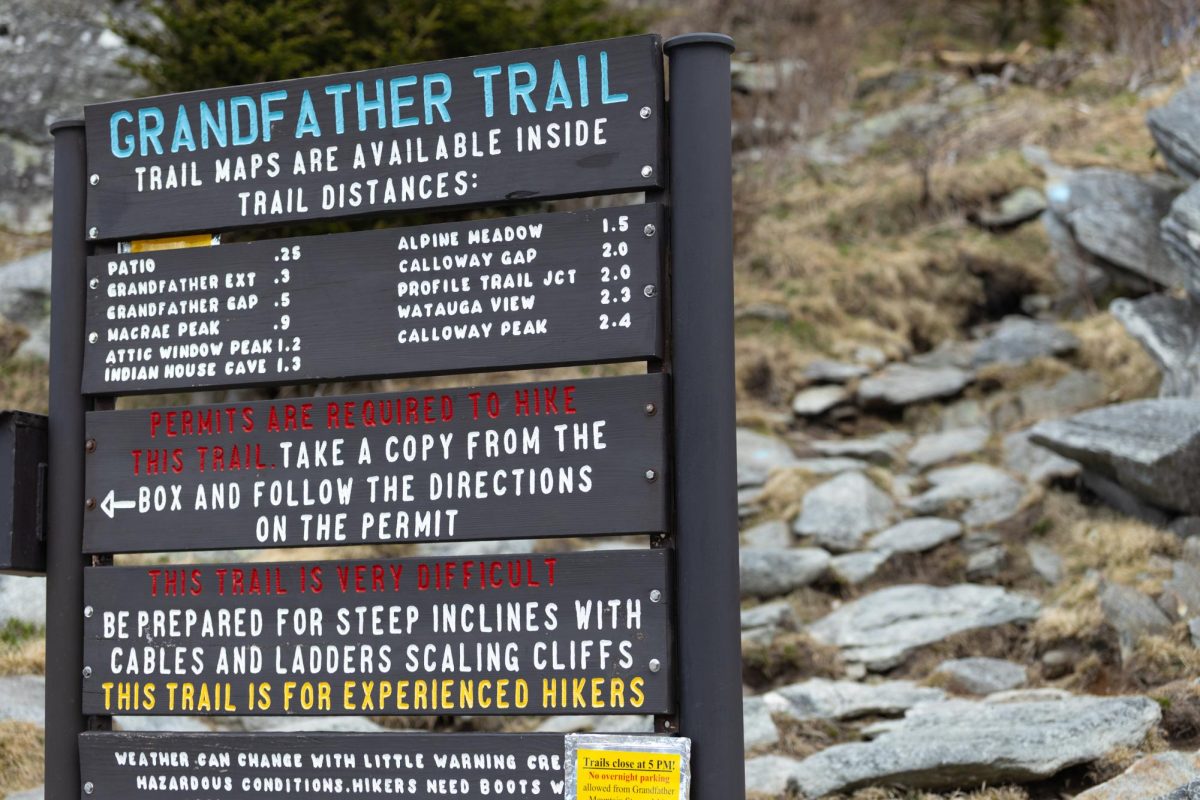
A hiker was injured falling from the last ladder leading up to Grandfather Mountain’s McRae Peak March 22. Due to the severity of the injury, the Linville-Central Rescue Squad and North Carolina Helicopter Aquatic Rescue Team were called to launch a rescue operation to administer aid and get the hiker off the mountain safely. The rescue teams were able to coordinate NCHART’s airlift from the peak of Grandfather Mountain and successfully transferred the hiker to a medical facility for further treatment.
Grandfather Mountain is among the highest peaks on the East Coast and is a popular outdoor destination in the High Country. The mountain’s cultural ubiquity and tourist activities, including its museum and animal habitats, mask the danger of the strenuous trails lying just beyond the bear caves. Although the High Country’s trails may be difficult, knowing the right precautions and procedures before a trip can keep hikers from danger in an unpredictable landscape.
Richard Schaffer is the K-9 search and rescue group leader for the Linville-Central Rescue Squad and a professor emeritus of business law at App State. In his 25 years of experience with wilderness rescue teams in Western North Carolina, he has seen the hazards these mountains carry, even for experienced hikers.
“The big picture is to not underestimate these mountains if you’re not familiar with them,” Schaffer said.
Schaffer’s time on the rescue squad has varied from basic extractions on foot to complex, time-sensitive air operations. One of his recent rescue missions involved helping a dehydrated hiker who was suffering from severe leg cramps that made it impossible for them to continue any further on their own.
“We had to go in, get them rehydrated and help them down the mountain,” Schaffer said. “That was really simple, but it still took four to five hours.”
Schaffer said hydration is critical, especially on longer hikes. He recommends bringing two to three liters of water on your person, as well as a high-quality filter that can be used to drink from natural water sources to keep hydrated in a pinch. He uses a reusable filter that can be attached to a plastic water bottle.
The right gear for the trip is also important. Schaffer said a rain jacket and fleece can protect from hypothermia during sudden weather changes, which can occur in temperatures as high as 60 degrees Fahrenheit in certain conditions. Above-the-ankle footwear, batteries and a flashlight or headlamp are also vital.
“I ask hikers to bring two flashlights because they don’t know when they’ll get back,” Schaffer said.
In the aftermath of Hurricane Helene, many forests were damaged or destroyed. Even as the two-year anniversary approaches, Schaffer said the trails “are no longer what they used to be or where they used to be.”
“Be aware that the trails you once knew may not be there,” Schaffer said. “It can be disorienting.”
Julie Mullis, an interpretive park ranger and educator at App State and Lees-McRae College who works on the Blue Ridge Parkway, notes the variable elevations of the Blue Ridge’s valleys, peaks, creek crossings and lack of established trails as hazards. Mullis also faces thick rhododendron patches on trails.

“It pulls you further and further until you get out, and you don’t know where you are anymore,” Mullis said.
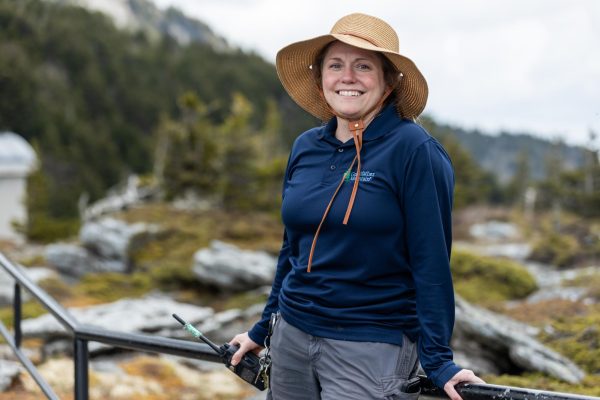
Rose Trew, a natural resource management specialist for the Grandfather Mountain Stewardship Foundation, knows the mountain better than most. Trew grew up in Foscoe, “in the shadow of Grandfather,” and later moved to Boone, attending App State. Now working at Grandfather Mountain, she manages trail maintenance; ecological research; invasive and endangered species; trail sweeps; and search and rescue.
“It’s hard to pass up an opportunity to play outside for a living,” Trew said.
Before embarking on one of Grandfather Mountain’s trails, Trew urges hikers to fill out a permit at the trailhead so rescuers can keep track of who is on the mountain. Trew also recommends packing extra snacks, expecting sudden weather changes and taking “more time than you think you need” on a trail to avoid racing the park’s closure at sunset.
“These trails can be gnarly,” Trew said. “Sometimes you don’t know what you’re in for until you’re in the thick of it.”
In her time working at Grandfather Mountain, Trew has seen visitors come from across the country. These visitors sometimes make a spontaneous decision to take on one of Grandfather Mountain’s strenuous trails without the right preparation. When this happens, Trew said it’s important to not push oneself too hard.
“It’s a tough call to call off a hike after driving two hours up to Avery County,” Trew said. “But you have to listen to your body.”
Although Mullis believes preparation is vital, she said one of the keys to navigating trails in the Blue Ridge is to embrace uncertainty.
“Always think before you put your foot down,” Mullis said. “You never know what could happen next.”