While the phrase “play me some mountain music” can be heard in Kidd Brewer Stadium every game day, the genre itself can be hard to define.
Originating from folk music and emerging with jam-centered improvisations, bluegrass is often found at the center of Boone’s “mountain music.” Seen downtown, visual landmarks like a mural and bronze statue attribute much of the genre’s local presence to certain guitarists from Deep Gap.
Trailing the American folk revival, Doc Watson began gaining significant popularity as a performer in Western North Carolina in the ‘50s.
Gary Boye, the director of the Erneston Music Library, has worked at App State since 2000 and refers to Watson as a “godfather of everything local.”
“The attraction with Doc Watson is that he was able to represent this area outside of this area,” Boye said. “And it’s interesting ‘cause, even after he was discovered in the 1960s, it took a while for people to really realize how big a name he was around here.”
From an Appalachian perspective, bluegrass can feel closer to jazz than old-time music, something Watson often displayed.
“And to me, that’s a characteristic of Appalachian music is that they take lots of different types of music and combine them,” Boye said.
Boye conveniently arrived in town around the time Watson discovered the Old Crow Medicine Show. Busking outside of Mast General Store and Boone Drug, the group’s old-time instrumentation was fresh with new interpretations.
Since being discovered, Old Crow Medicine Show has gone on to win multiple Grammy Awards, and the group’s song “Wagon Wheel” can still be heard regularly in the High Country.
The band’s notable ability to teeter between musical influences without listeners recognizing it sets it apart from other groups, something Boye notices artists continuing to do.
“Each year I’ll find somebody who’s probably early 20s or something like that, and they’ve got this thing where they combine unique influences into their own thing, and it’s, you know, suddenly there’s a new person,” Boye said.
This array of inspirations often blurs the lines between genres, and artists in Boone have been doing it for decades. Through punk, country, rock and the blues, there’s often a crowd eager to listen, even if they can’t label what they’re hearing.
One of the more memorable names to come out of Boone in recent years is country music star Luke Combs.
In an interview with Time Magazine on April 15, Combs addressed his attempts to adhere to his genre’s roots while mixing in contemporary inspirations. He went on to say the modern country scene — thanks to the recent trend of genre-bending — is bound to have something for everyone, even those who say they don’t like country.
“There’s some version of it that you like,” Combs said in the interview. “You just haven’t found that one yet.”
Combs’ attitude of sonic flexibility is a direct result of the folk and bluegrass environment surrounding his early career. This influence affects genres beyond country as well, spreading to the post-punk revival of the early 2000s, which has largely influenced the current indie-rock scene.
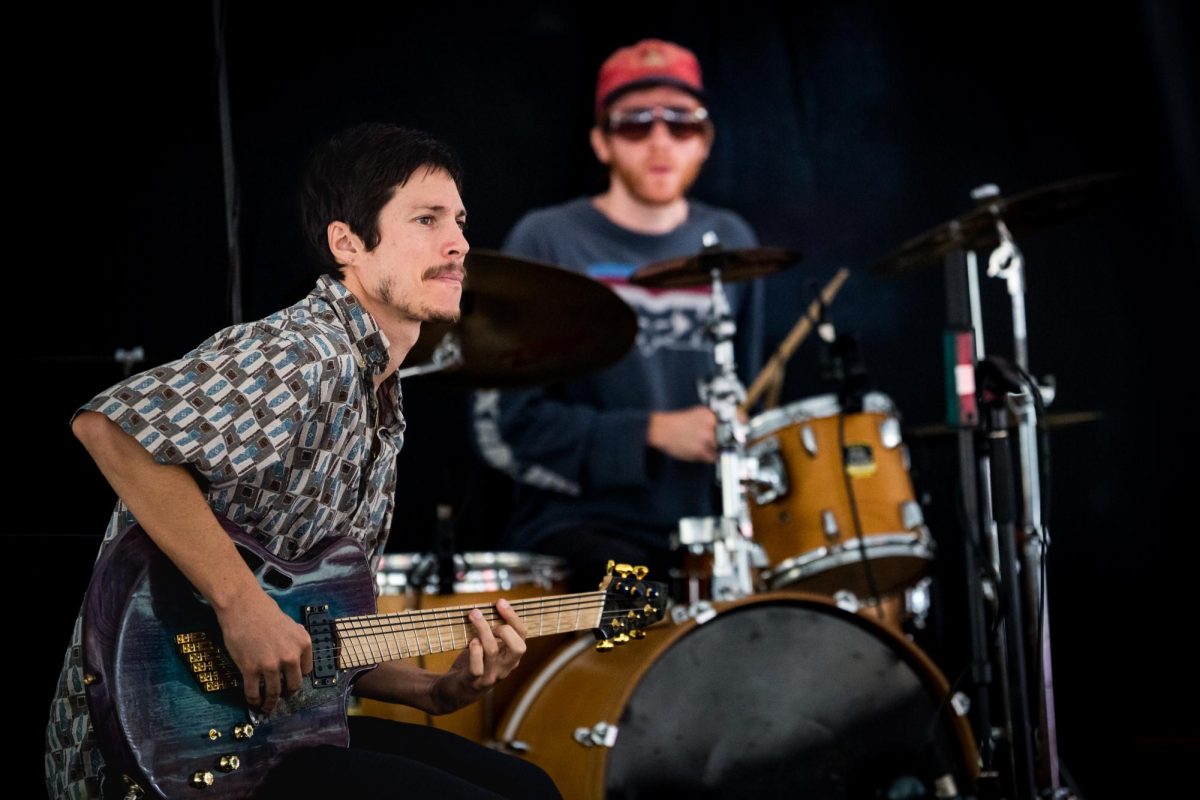
Kole Pjetraj, a guitarist in the electric jam band Satellite Dog, has been living in Boone while on a gap year from his studies of computer engineering at North Carolina State University. Similar to Boye, Pjetraj said the folk and bluegrass roots often blend with other genres, something Pjetraj greatly attributes to student musicians.
“I think that music here in Boone has a distinct sound that pulls from many genres, and I think that the distinctiveness stems from both the regional musical culture of the Appalachian high country and the unique blend of artists that Boone attracts from all over the country,” Pjetraj wrote in an email.
The similarities between Boone’s stylistic roots and its contemporary counterparts often occupy the same spaces, which Pjetraj said encourages them to interact.
“Very often you’ll find bluegrass and folk bands sharing a bill with psych rock, fusion, or jam bands in ways that I find happens less often in other places,” Pjetraj wrote.
While access to musical influence has grown exponentially in the digital streaming age, Pjetraj said Boone’s current scene still remembers its roots and draws inspiration from its long musical tradition.
“Although the style and genre of a legend like Doc Watson is very different from my own, he is at the top of my list of inspirations and it is very significant to be able to play music so near to his birthplace,” Pjetraj wrote.
Regardless of genre, this appreciation flows through every note played in Boone, loosely defined as “mountain music.” App State even remembers its musical heritage with IG Greer Hall and the Cratis D. Williams School of Graduate Studies — both named after historic folklorists.
“The more you learn about your local history, the more you appreciate the changes that have gone on and the things that have happened,” Boye said.