
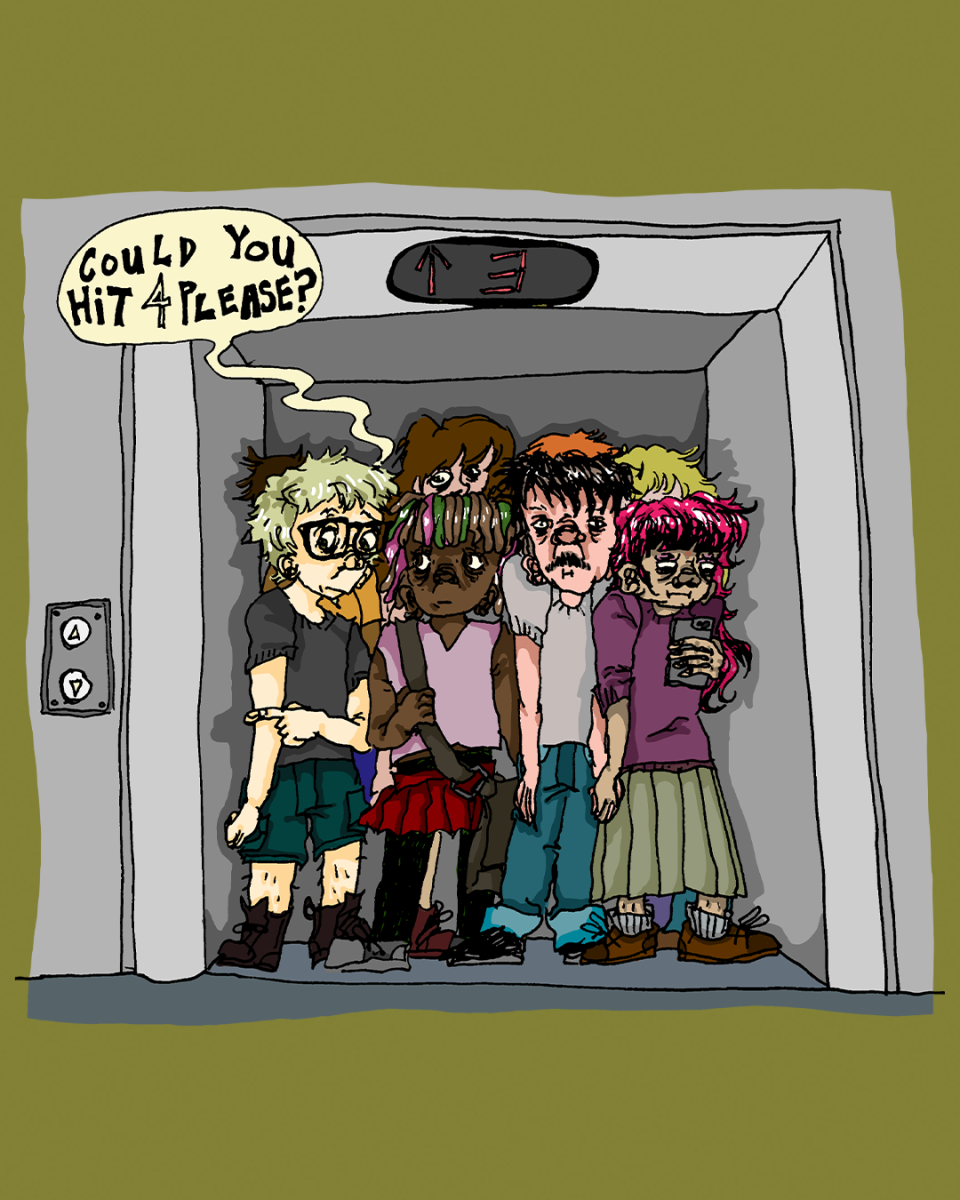
As far as college acceptances go, getting into App State isn’t exactly remarkable. That doesn’t mean it isn’t an accomplishment — it just means it’s an accomplishment most applicants can claim. With App State’s acceptance rate hovering around 89%, a prospective student is more likely to find weekend parking on King Street than get their application rejected.
This isn’t to suggest that the university has ever presented itself as an exclusive or elite institution. However, when nearly 9 out of 10 applicants are admitted, it not only stretches resources for students but creates challenges for the faculty and school as a whole.
App State’s acceptance rate, which once stood at 66% in 2015, has crept steadily upwards over the last several years. This 32% increase in admissions over a single decade directly corresponds with rising enrollment numbers, climbing from just under 18,000 students to nearly 22,000 on all campuses in 2025.
While the growing student body demonstrates App State’s appeal, it also underscores the logistical and academic challenges of admitting so many students.
For students, the most obvious impact of a high acceptance rate is overcrowding. Dorms are at capacity, and even with new residence halls being built, the university has struggled to keep up with demand. In 2022, App State added 2,300 beds in four new residence halls, and another 1,850 beds were planned through projects on the Boone campus and the Appalachian 105 site.
Yet, the numbers still fall short. Of nearly 18,000 full-time students in Boone, only about one-third can be housed on campus. This shortage forces students into off-campus housing, where low vacancy and little competition have caused rents to spike. The result is longer commutes, steeper costs and a weakened sense of accessibility and community that on-campus living is meant to provide. At this rate, App State’s first-year seminar should include a crash course on camping to prepare students for the housing scramble.
Beyond housing, App State’s increased enrollment has also put pressure on transportation. Given that parking in Boone is already a nightmare, admitting more students who rely on campus parking makes zero sense. Not only are parking passes expensive — ranging from $400 to $800 per year — but students are often required to join waitlists and win lotteries to secure a spot.
And the headache doesn’t stop there. The cheaper parking spots might as well be in a different town, forcing students to take a bus just to reach their own car. Nothing screams sustainability like using two modes of transportation instead of one. App State seems to be modeling the size of its carbon footprint after the boots of its large, lumbering mascot, Yosef.
Overcrowding has also become a major problem on campus buses, leading AppalCart to introduce a double-decker bus to ease the strain of packed routes. Upgrades like this are a clear indicator that App State’s campus is holding more students than its transportation system can comfortably handle. These challenges create daily stress for students, making it difficult for some to get to class on time and utilize on-campus resources for academic success.
The parking struggle doesn’t only affect students, either. Even faculty and staff face limited options, navigating a similar parking pass system without any guarantee of a spot. These are the people expected to arrive early and teach, yet they too have to take the bus or circle the lots just like students. If the university can’t even provide reliable parking for the staff who keep it running, how can it expect them to effectively do their job?
When faculty are struggling with issues of overpopulation, students inevitably feel the consequences in the classroom. Larger class sizes make it harder to get individual attention as a student and meaningful feedback becomes more difficult to provide.
The same problem extends to advising. With too many students assigned to each advisor, meetings can feel rushed and impersonal. Students walk away feeling more like a number on a list than an individual with goals and concerns — a sense of being overlooked that only grows as more students are admitted.
The consequences of a climbing acceptance rate show up in nearly every corner of campus life. Resources that are supposed to support students, such as the campus health center and counseling services, are stretched thin under the weight of rising demand. As more students compete for the same limited services, appointments are likely to become harder to book, wait times longer, and the overall quality of care increasingly difficult to maintain.
When basic services can’t keep pace with enrollment, students are left without the support they need to succeed both inside and outside the classroom. At that point, the issue isn’t just overcrowding — it’s whether App State can realistically serve the students it chooses to admit.
Jannell Hanood • Oct 28, 2025 at 8:54 am
Well said, I agree with this 100%. Acceptance needs to be capped so all students can succeed. Successful members of society rolled out of a university should take precedence over money received for tuition.
Barry Branham • Oct 26, 2025 at 11:32 am
All colleges need two things to grow . First is money and second is reason. Money is raised many ways but your largest contributors . To make contributors you need students. No college is getting rich cause of students, but they are from that result alumni. Second is the reason, the larger the Universty the more attractive it is to increasing its sports programs. Large sports brings hugh amounts of money. None of it can be done with a small amount of students. I’ve watched App State grow over the last 32 years grow slow and remarkably fast. It’s latest expansion being in Hickory we by the way everything cost less than Boone. I hope I’m here in 20 years were I can watch my Oklahoma Sooners play App State
AG • Oct 25, 2025 at 7:06 pm
My son has never had any issues getting appointment at health center or being late to class due to busing. Yes it is busy there . A lot of college campuses have competition for renting places. By no means is it unique to App. Hearing that from dozens of parents other schools too in many states. Was like that 30 years ago too when I went to undergrad in Boston.. This article is overhyping alot of the issues. Yes, teachers should have their own lot. Take this article with a grain of salt. App is great! A lot of NC schools have high acceptance crates an are popular, appealing . . You can get into ECU in 48 hours lol . The population in NC has risen dramatically as well so it makes sense that they would admit more instate students …