
Editor’s Note: This article contains mentions of sexual violence and assault. If you or someone you know is in need of assistance, call Wellness and Prevention Services at 828-262-3148 or the OASIS hotline at 828-262-5035.
For the past 25 years in the United States, Sexual Assault Awareness Month has been recognized every April following its official designation by the National Sexual Violence Resource Center in 2001. The campaign is used to address instances of sexual violence, offer support to survivors, promote prevention and more. That being said, in a society plagued by redpilling, the Epstein files and an uncertain political climate for women, it’s vital that cases of sexual assault are given the attention they deserve.
According to the NSVRC, 81% of women and 43% of men have reported experiencing some form of sexual harassment in their lifetime. As the number of sexual assault related crimes increases, it’s unfortunate that not all reports are given the same amount of attention.
Sexual violence does not look the same every time and can appear in a multitude of ways. Verbal harassment, rape, nonconsensual pornagraphy, coercion and sexual assault all fall under the umbrella of sexual violence. While it’s important to remember that sexual violence takes many forms, it’s also important to acknowledge that each instance should be taken just as seriously as any other would.
Despite heavy emphasis on the importance of bringing light to these sensitive matters, tolerance as well as ignorance to sexual assault is becoming too normalized. With rape culture on the rise, society is becoming desensitized to these matters due to the glamorization of sexual assault through popular media. The reality behind this ideology is that it diminishes the experiences of survivors and takes away their voices.
The song “U.O.E.N.O (feat. Rick Ross, Future)” by Rocko contains the lyrics, “Put Molly all in her champagne, she ain’t even know it / I took her home and I enjoyed that, she ain’t even know it.” The lyric segment, whose accompanying sound bite was used a whopping 46,000 times on TikTok, reflects the tendency to turn sexual assault into a joke. Warping the boundaries between a pressing matter, such as sexual assault, with comedic energy leads to unserious reactions on the subject.
Commonly, perpetrators of sexual violence will try to excuse their actions by blaming them on drugs, alcohol or other third-party resources. This dangerous mindset formulates a pipeline for people to believe that, under certain circumstances, sexual assault can be excused. Survivors cannot consent under the influence of mind-altering substances, and offenders cannot use substances to justify their actions.
Most sexual assault crimes are committed by someone the survivor knows. Not only do these situations make it difficult to readjust to normalcy in their daily lives, but they also make it so survivors have to reassess their inner circles and environments. The last thing survivors need when seeking support is having other people they’re close with dismiss their feelings through actions such as siding with abusers and accused individuals.
A popular reasoning people use to defend continued involvement with alleged offenders falls along the lines of “I know them, and they would never do something like that.” The harsh reality is, no matter how well you know someone, you can never be 100% certain of their actions.
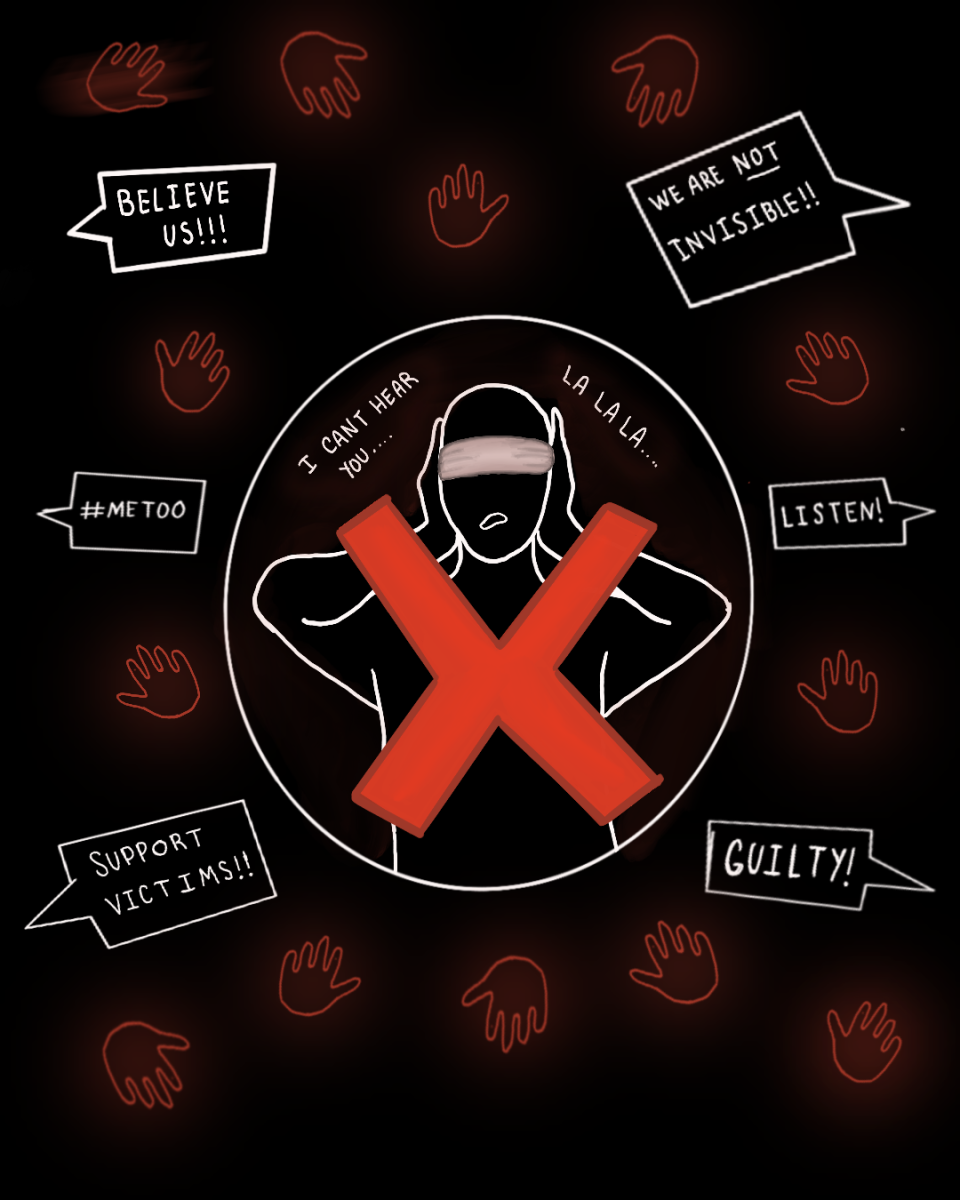
Not only is it tone deaf to accuse survivors of lying about their experiences, but it’s even worse to surround yourself with individuals who have been accused or found guilty of such crimes. Blatant ignorance will not undo the actions of abusers, and it will not make the pain survivors have experienced go away. Every survivor deserves to have a voice, and simply ignoring what they have to say does not change what happened to them.
Support for survivors doesn’t mean you understand the ins and outs of a situation; it means putting in effort in whatever way possible that will best suit the needs of the survivors. While some people may have good intentions, not everything concerning survivors is completely understood.
The term fawning is often an overlooked term regarding sexual assault. Although some people may instinctively choose fight or flight in the face of a threat, some people freeze up, which is the body’s natural reaction to keep them safe. Just because a survivor did not run away or fight back does not mean a situation is their fault.
There is no pattern survivors will follow after experiencing abuse. Most deal with their trauma differently. Just because a survivor chooses to stay quiet does not mean that what happened to them should be justified. It is not uncommon for survivors to appease their assaulters out of fear, proving that support and protection from others are needed more than ever.
While many might believe they would be there to offer protection to survivors, the bystander effect appears more often in these situations than one would think. People like to believe they would do the right thing when it comes to helping those in need, but there’s a tendency not to make other people’s problems their own. Although it’s much easier to ignore people, intervening is a more responsible approach that should become more common.
The disheartening nature that is too often displayed when it comes to ignorance and sexual assault makes survivors feel weak and unheard, which should not be the end result. As a society, it’s critical to reevaluate habits whether they are intentional or not in order to give sexual violence survivors the solidarity they deserve.
Ignoring sexual assault is not only harmful to those affected, but also society as a whole because it sets an example that abusive behavior is acceptable and inevitably expected. Society should not assume what survivors want or think, nor should people consider themselves allies if they dismiss survivors’ claims and surround themselves with sexual assaulters.
Society should continue to make sure survivors are not silenced by ensuring that every survivor is treated with respect and empathy regarding their story. When it comes to sexual assault, uncomfortable conversations are needed because ignorance is not going to offer any resolve for those affected. As long as there are people who advocate, whether it be during April or any other month of the year, survivors will never be alone in their path to healing.