
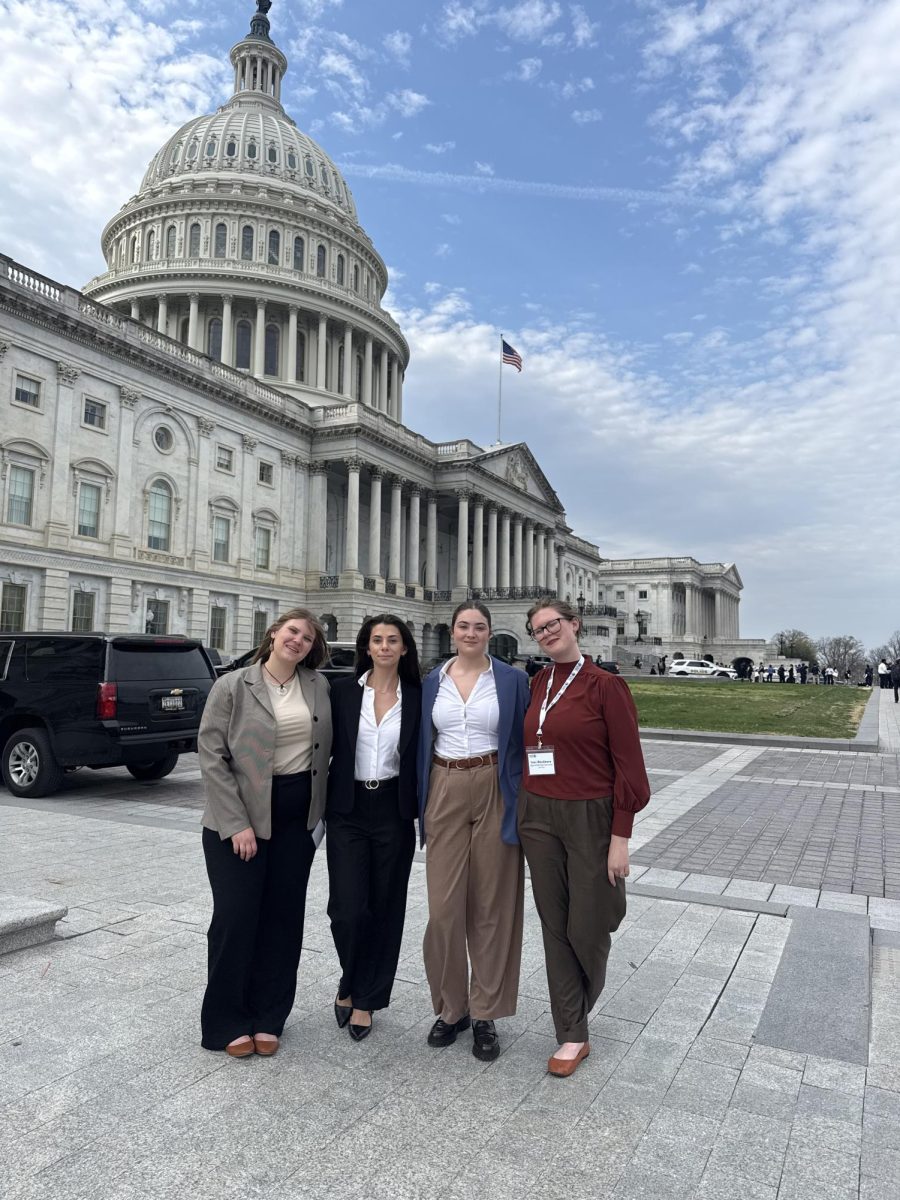
From March 25-27, students from App State’s Sustainable Development department took part in the Rachel Carson Council’s annual Advocacy Day. This program puts college students from across the country in the halls of Congress to discuss environmental protection policy directly with lawmakers.
“Each year, our Advocacy Day brings together a new generation of leaders who refuse to accept environmental destruction as the status quo,” said Bob Musil, president and CEO of the Rachel Carson Council in a press release.
The Rachel Carson Council is an environmental organization lobbying for ecological protections and sustainable governance. It was founded in 1965 after the death of Rachel Carson, a prominent conservationist and author of “Silent Spring.” Her work led to a nationwide ban on the pesticide DDT and the creation of the Environmental Protection Agency.
In attendance were senior sustainable development and anthropology double major Anna Harrison, whose research involves the cultural value of Kudzu plants in Appalachia; senior sustainable development major Iona Blackburn, whose work focuses on the social intersection of ecology and feminism; senior sustainable development major Megan Prosser and junior sustainable development major Kendall Nerenberg. They advocated for regulations on wood pellets as biofuel, the Polluters Pay Climate Fund Act, the 2026 Farm Bill and the Opportunities in Organics Act.
“A lot of the work I’ve been doing is bottom-up grassroots,” Harrison said. “Seeing how people can take love for the environment and turn it into advocacy work was really helpful.”
While at the Capitol, students got a firsthand look at the lawmaking process. They met with aides for Reps. Rob Wittman and John McGuire of Virginia, as well as Rep. Virginia Foxx, who met with the visitors from her hometown of Boone herself.
“She was really excited that we were there,” Harrison said. “But she was less interested in environmental impact than economic benefit.”
Blackburn advocated for the Polluters Pay Climate Fund Act, which aims to create a climate superfund collecting $1 trillion over 10 years from the top 50 fossil fuel and oil companies in the country. Although the environmental advocacy with Foxx was fraught, Blackburn believes the talks were productive overall. She said they got a lot out of the visit with Boone’s representative in Congress as the student advocates got a chance to watch Congress debate on Department of Homeland Security funding.
“She ended up being judgmental, but she emphasized that she really wants young people to see the process of politics,” Blackburn said.
After the talks with representatives finished, the group got a chance to enjoy the Capitol’s springtime atmosphere with a renewed reverence for the environment and hope for United States politics.
“It was really fortunate timing. We were right there when the cherry blossoms were in full bloom,” Blackburn said.
