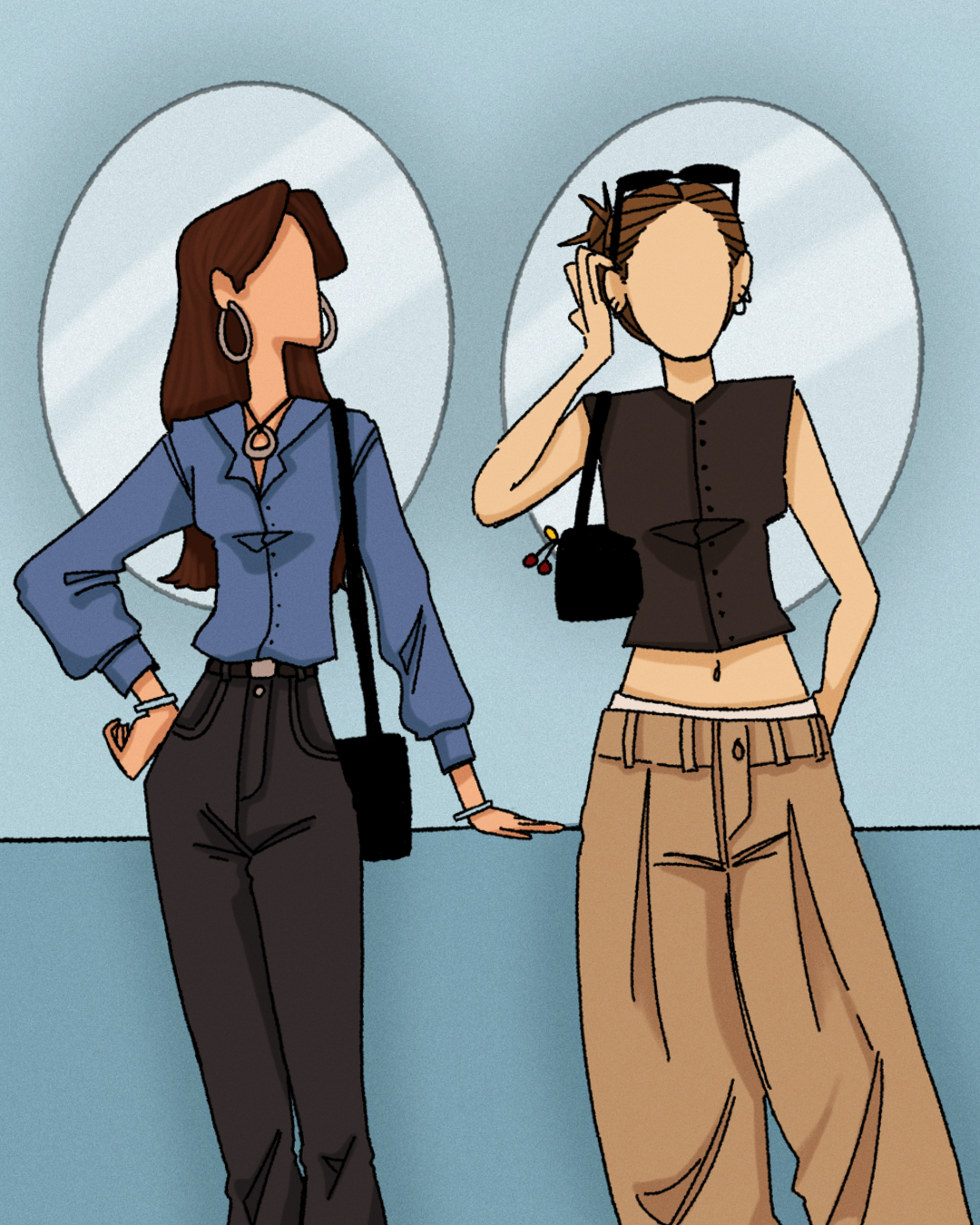
The term “business casual” can take on many different meanings. From jeans to suits, much is left open to interpretation based on the circumstances. For students, throw in the amount of varying perspectives, and it can be even harder to navigate. That being said, there are guidelines to consider when following a business casual dress code.
Ayla Solomon, a junior international business major and president of the International Business Student Association, said that business casual is a step down from business professional.
“I would say it’s just avoiding anything that’s too casual that you would go on an everyday outing with, like jeans, sweatpants, things like that,” Solomon said.
Solomon said that business casual usually warrants more neutral tones, as well as close-toed shoes.
By contrast, Solomon said business professional is a step up from business casual and includes jackets and blazers.
Colton Taylor, a senior public relations major and president of The Appalachian Society for Communication Studies, said that blazers and shorts do not fit into business casual.
“If you’re wearing a sports coat, you’re immediately going into business professional,” Taylor said. “I don’t think shorts are ever appropriate in the business workplace, unless you are specifically actively working outside.”
Solomon said that when it comes to jeans, they are subject to the work environment. She said that typically jeans are a no-go for business casual, but can depend on an individual’s work environment and its standards.
Vivian Shillingsburg, a junior public relations major and president of the Appalachian Student Ambassadors, also said it depends on the environment the student is in.
“If you’re interviewing for a nonprofit, you would probably wear something more like jeans and a sweater, but if you were going into a corporate interview, you would want to lean more towards the slacks and loafers and nicer top,” Shillingsburg said.
Shillingsburg said that modesty was a major factor in knowing how to dress in business casual clothing.
“For women, you don’t want to be wearing a shirt that’s too short, that may show your midriff. You want to make sure that if you’re wearing a skirt or dress that it’s long enough — probably fingertip length — and you’re not showing too much,” Shillingsburg said.
However, Harley Locklear, a junior economics major and former president of the Future Business Leaders of America, which is currently inactive due to budget cuts, said while companies tend to expect aspects such as piercings and tattoos to be covered, she instead sees it as a display of personality.
“I don’t want to have to change the fundamental being of who I am for a business. The business should want me to join them as I am,” Harley said.
Harley stated she never takes out her facial piercings, and though the requirement to cover them up is easing, it is still quite common.
Noelle Johnston, a junior political science major and Appalachian Student Ambassadors relations chairperson, said the fit of the items is also an essential part of business casual.
“Find that fit where you look comfortable, like how your jeans feel on you. You want them to feel loose enough to where you feel like you can move around, but tight enough where they’re not going to fall down,” Johnston said.
There are many cost-friendly places in Boone for business casual clothing that are accessible to students on campus. Shillingsburg said she starts her shopping at local thrift stores, including Goodwill, Anna Banana’s and Ram’s Rack Thrift Shop, then moves on to T.J. Maxx to find her desired items.
Solomon said that Goodwill has blazers and suit pieces that are better to look at first before shopping online.
There are also a lot of resources on campus to aid students in obtaining whatever clothing they need. App State hosts many events where students may pick out old, donated business clothes to add to their business casual wardrobe.
These events include the Free Store Road Show hosted by the Office of Sustainability and Energy Management on Sanford Mall every Tuesday and the free store on the ground floor of East Hall.
Solomon said that business casual attire should be a form of confidence boost.
“It’s something that you feel good about yourself in, and you feel like you’re making a good impression, and you have your armor on, and so you go into this thinking, ‘I’m ready. I know what I’m doing.’ You feel prepared, you look prepared, and if you need to fake it till you make it, that works too — and it starts with the outfit,” Solomon said.